
Knowhow
OBJECTS OF BEAUTY
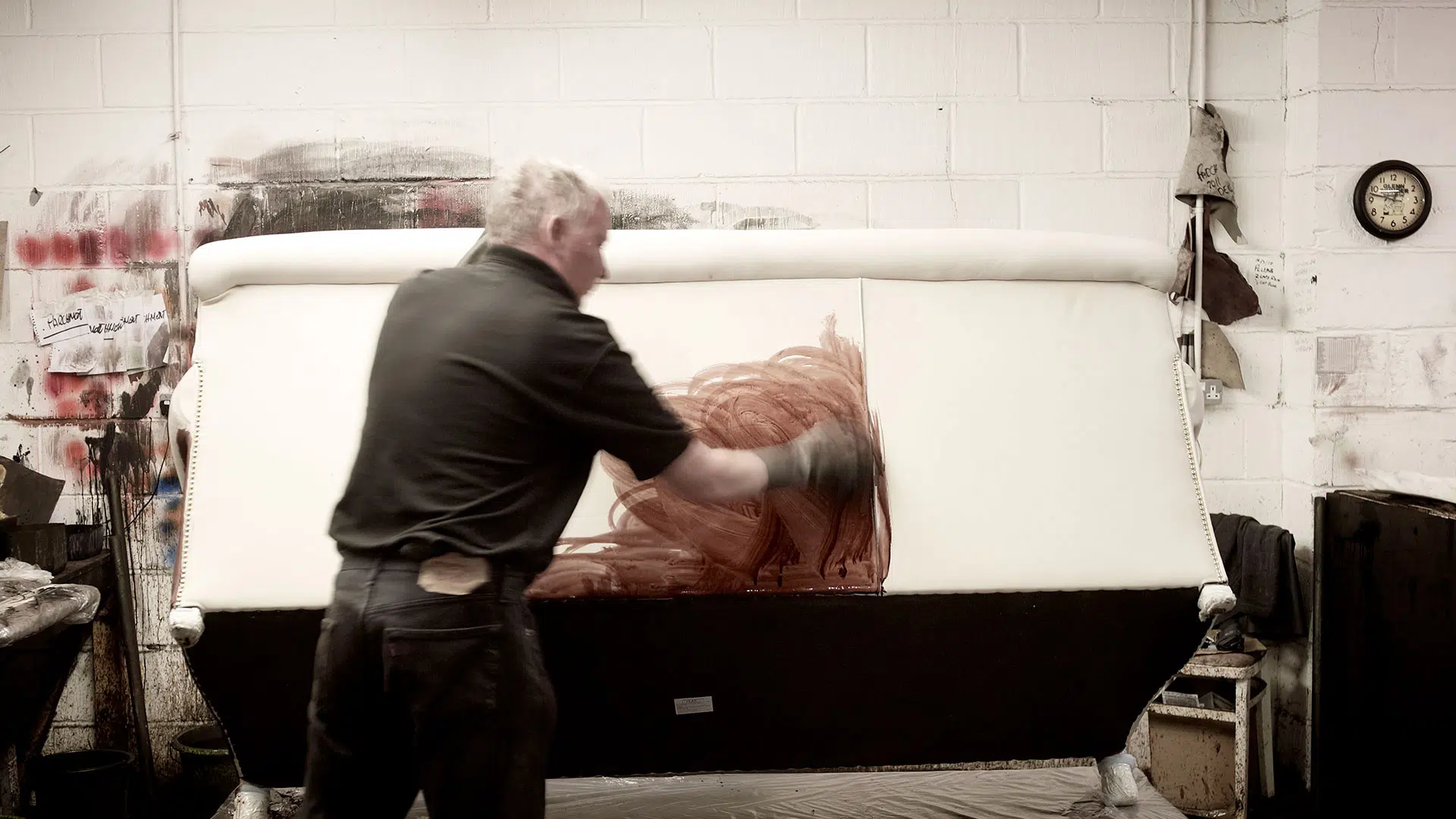
Colouring leather by hand is the essence of Fleming Howland, an age-old technique embedded within the company's deep-rooted history. In the 1780s Soloman Howland turned his hand from cordwainery to chair-painting, applying dye pigments, waxes and polishes to create a lustrous three-dimensional leather patina. Contrary to today’s industrial tanning techniques, the ancient art of colouring leather by hand accentuates the natural hallmarks of exceptionally high quality full-aniline leather.
It’s the imperfections that give us soul
Each hide is delicately massaged using specially formulated dyes that have evolved over generations. This treatment by hand creates a softness to the leather that is impossible to replicate through usual tannery methods. Up to six layers of dyes, wax and polish may be required to reach the correct intensity. Areas of the hide will absorb the colours in various intensities, dictated by the hide’s texture and hallmarks.
Designed to improve with age
Just as a painter would address a canvas, the antiquer would apply the dyes by hand directly onto the hide. The result is a leather that isn’t just incredibly supple, but transmits a distinctive, warm natural fragrance. Best of all, the dyes result in a natural aging process that improves the look and feel of the leather over time and use.
Bespoke colours
What makes an object truly bespoke is having something you know you won’t find anywhere else. This concept of catering to the individual rather than the masses is what gives furniture its true value. No other process allows such variation in colour depth and choice, whether it is one of the standard colourways or a bespoke colour made just for you.

Digital Brochure
Submit the form to receive full collection of digital brochures by email.
Request Brochure
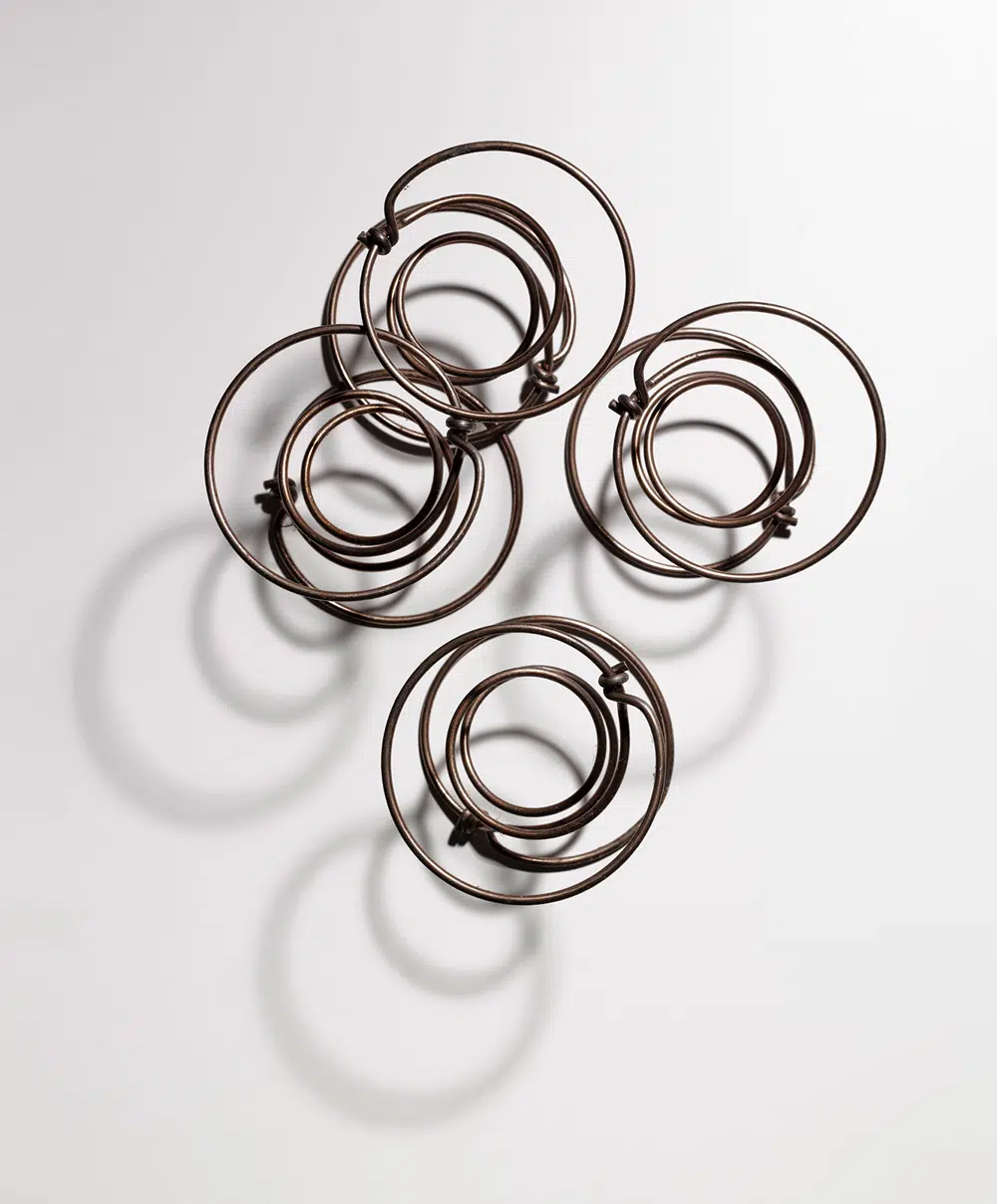
The frame forms the architecture of every design. A structure composed of over a thousand components, each individually tapped, fixed, or screwed into place. Joints are dowelled, glued, and reinforced, ensuring resilience over decades of use. For support, a combination of spring systems is employed according to design: steel serpentine for balance, or the distinctive “fish-mouth” springs where greater depth is required. Every element works in concert, creating both strength and refined proportion.



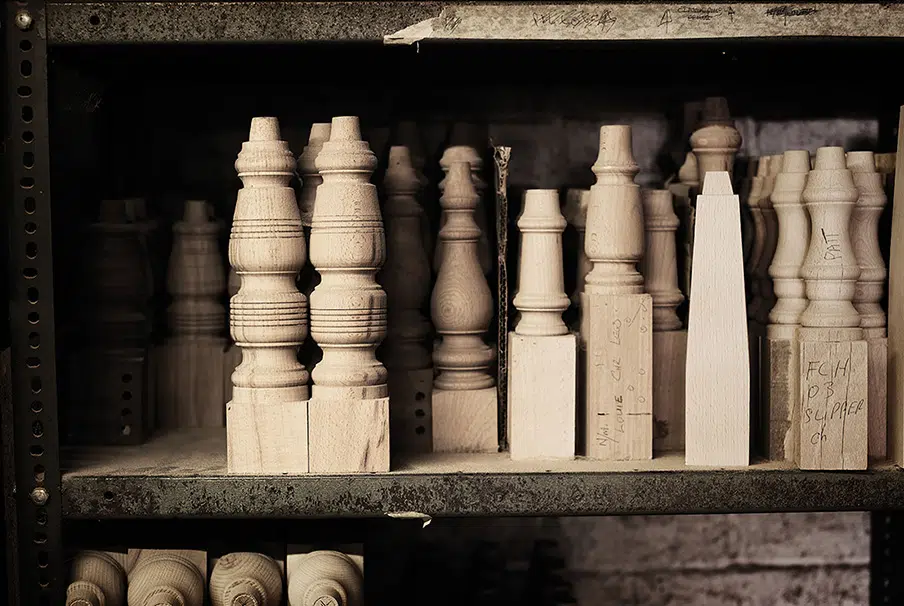
Strength begins with material. Fleming Howland frames are built predominantly from solid beech, prized for its density and stability. For integrated turned elements and decorative detailing, redwood sapele is introduced, adding both durability and a rich tonal quality.

All woods used for the manufacture of frames are certified by the Forest Stewardship Council (FSC). Based in Germany, the Forest Stewardship Council is responsible for controlling the sustainable management of forests, through various standards and policies.

PAUL FLEMING, SEVENTH GENERATION