
Back height, width and spacing establish a rhythm around the table. Drawing on early twentieth-century forms, Fleming Howland’s leather dining chairs combine shaped timber, curved backs and hand-worked upholstery with proportions designed to remain balanced in repetition.
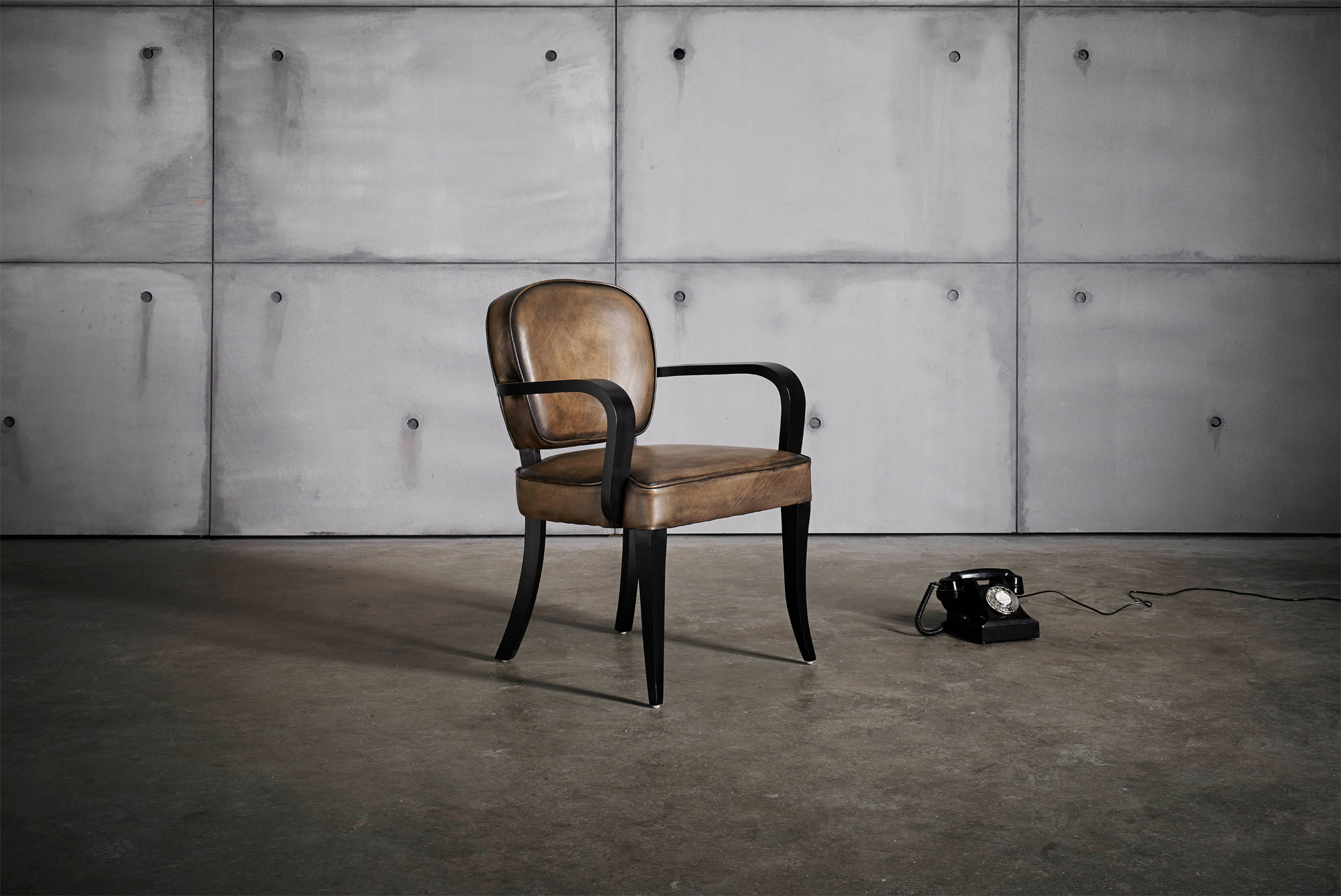
Dinning chairs
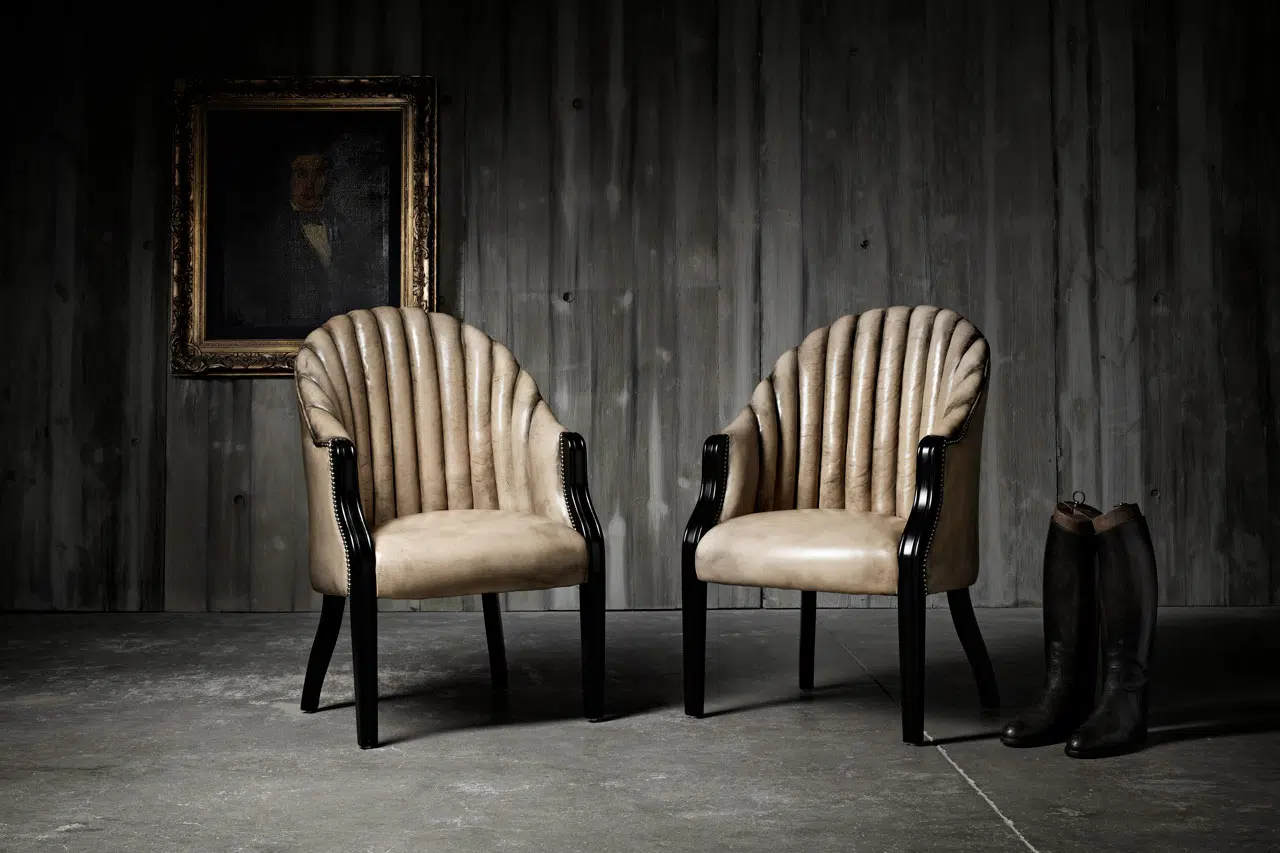
Belvedere
Barrel shaped and fluted with a scalloped side profile
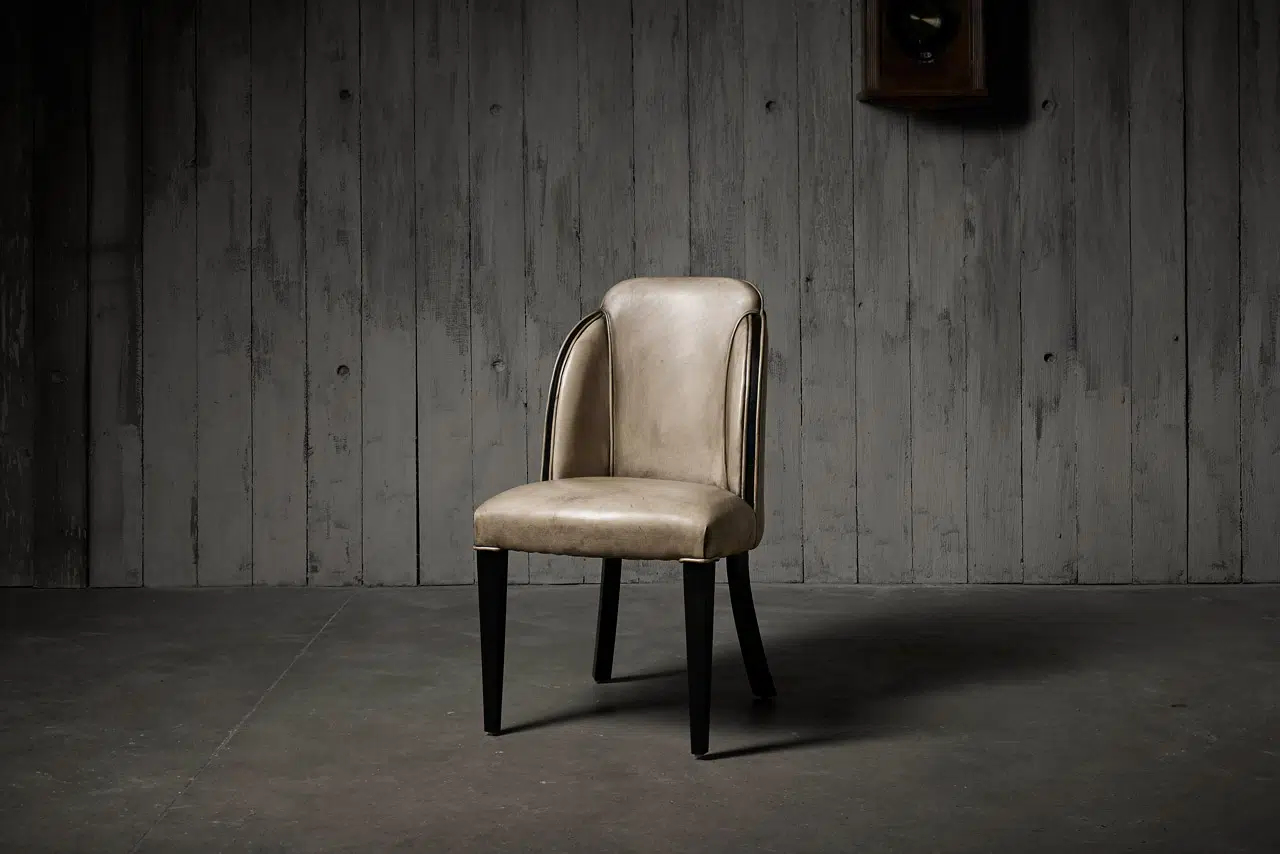
Deco Diner
Geometric curves accentuated by wraparound veneer banding
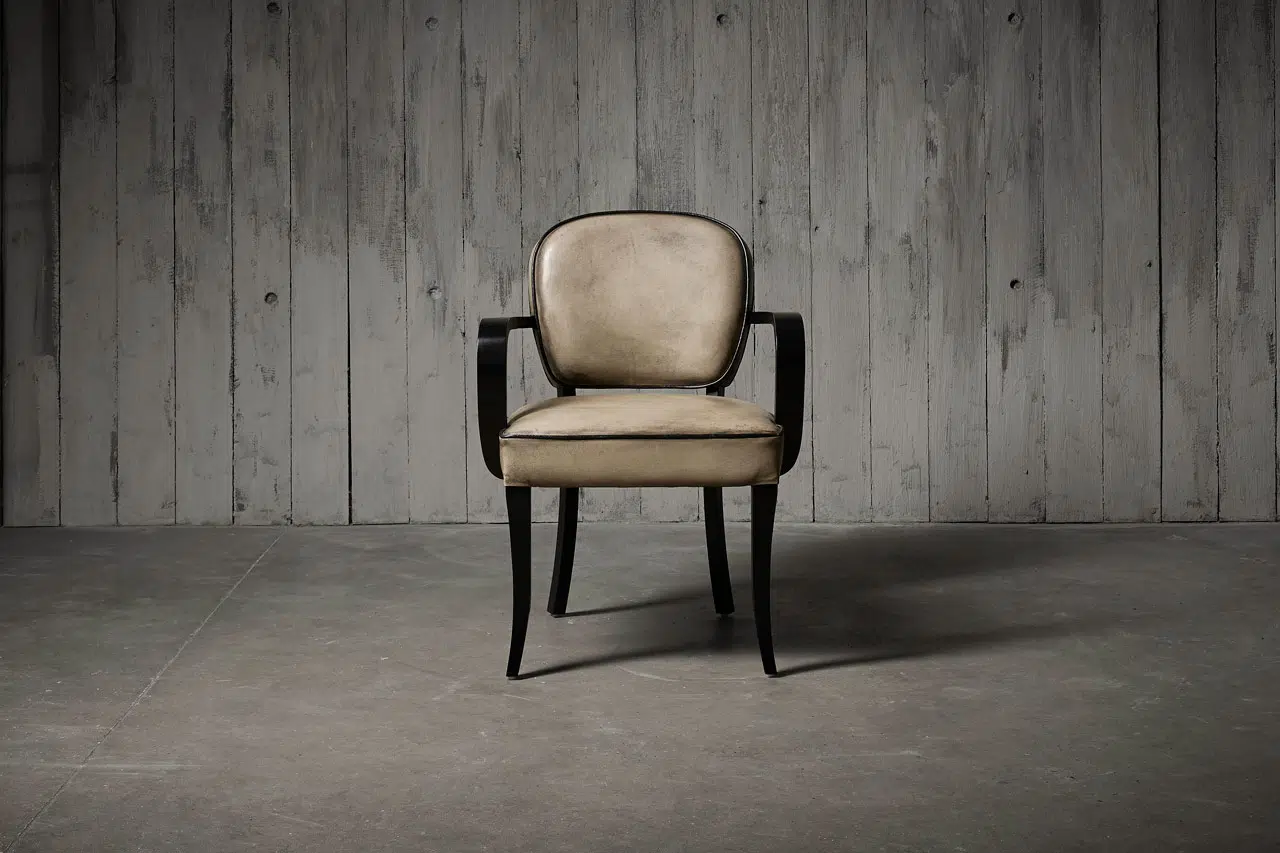
Bridge
A curvaceous dining chair as comfortable as it is beautiful
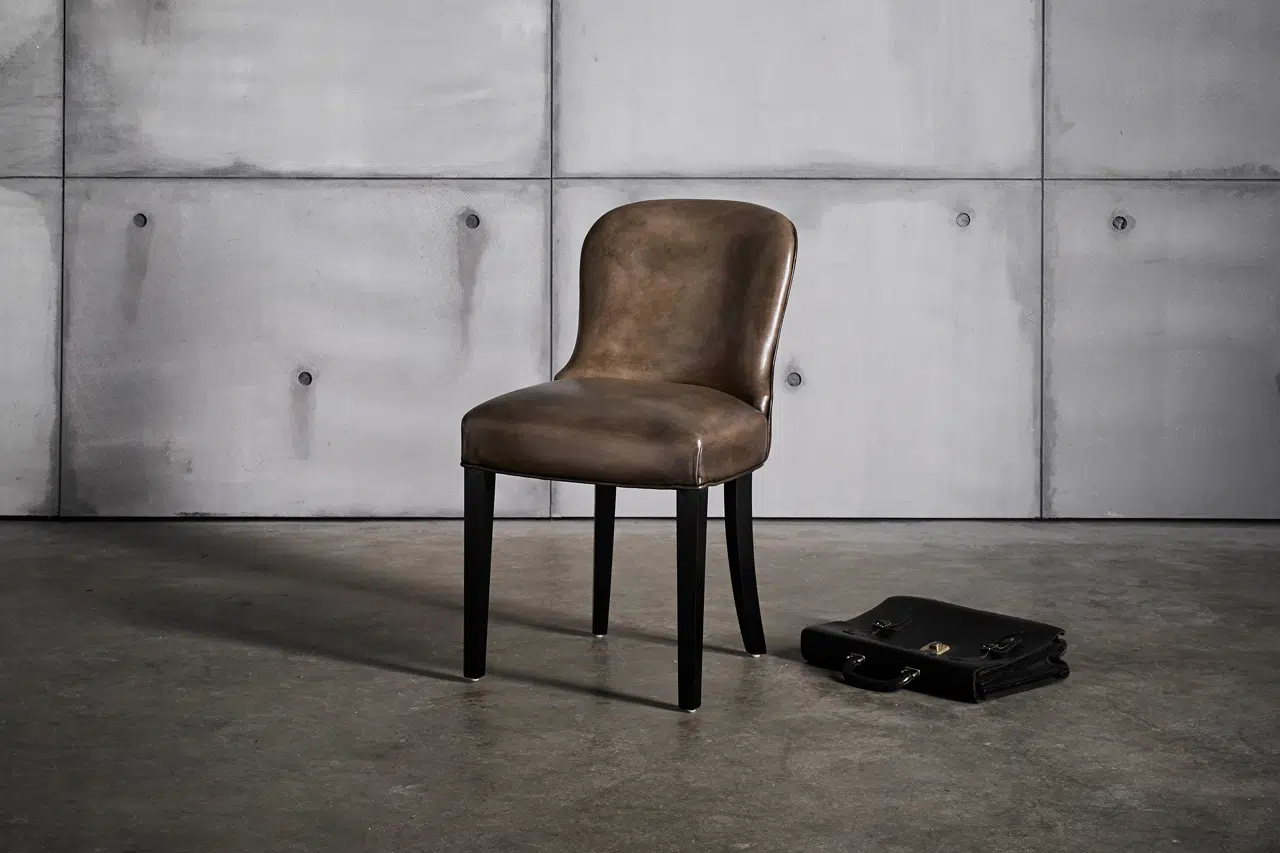
Diner
A backrest form reminiscent of a gently curved spoon
Seat height shapes posture, arm clearance controls how closely chairs sit beneath the table, and width determines spacing. References to 1920s and 1930s design bring geometric clarity, while leather grain gives individual character to a coordinated set.
Colour Guide
Colour gains emphasis across a full dining set. Tan, chestnut, green and brown reinforce period character; blue, red, gold or monochrome tones introduce a more contemporary effect. Consider repeated upholstery alongside the tabletop and floor.
Discovery box
A dining set repeats its upholstery across the room, making grain and tonal variation more noticeable. The Discovery Box allows hand-coloured leather and other finishes to be compared directly with the table, flooring and surrounding joinery.

Digital Brochure
Submit the form to receive full collection of digital brochures by email.
Request Brochure
Frequently Asked Questions
Is leather a good material for dining chairs?
Yes. Leather is durable, tactile and visually structured, making it well suited to furniture that is handled frequently. Hand-coloured and full grain leathers also develop subtle variation with use, which can give a set of dining chairs more character over time.
How do I choose the right dining chair dimensions?
Check seat height against the underside of the table and allow enough width for comfortable spacing between diners. If the chair has arms, confirm that they clear the apron or tabletop. Space behind the occupied chair is just as important for circulation.
Should dining chairs have arms?
Arms can make longer meals more comfortable and give end chairs greater presence, but they increase overall width and may prevent the chair from tucking fully beneath the table. A mixed arrangement with armchairs at the ends can work well on larger rectangular tables.
Do all dining chairs need to match?
No. Consistent proportions are more important than identical detailing. End chairs can differ in arms, colour or scale while still belonging to the same composition. If mixing designs, repeat one material or tonal relationship to keep the table visually coherent.
How should leather dining chairs be cared for?
Remove dust with a soft cloth and deal with spills promptly, following the care guidance for the specific leather finish. Avoid harsh household cleaners. Natural full grain leather will change with use, so some softening and tonal development should be expected rather than treated as damage.