
Fleming Howland furniture is handmade to order. Final dimensions may vary slightly from website dimensions, printed specifications, drawings or quoted measurements.
This is normal within handmade upholstery. Each frame, cushion, padding layer and upholstered surface is formed and finished by hand, not produced to machine-line tolerance.
Dimensional tolerance
A dimensional tolerance of approximately 6cm / 2.36in in each dimension may be expected, depending on the design, size and construction of the piece.
This tolerance may apply to:
- Overall height
- Overall width
- Overall depth
- Seat height
- Seat width
- Seat depth
The final measurement can be affected by frame construction, upholstery depth, cushion fill, padding compression, buttoning, seam position, leather or fabric tension, and the natural settlement of upholstered materials.
Published dimensions
Published dimensions are provided as a guide to scale and proportion. They should not be treated as exact finished measurements. For handmade upholstered furniture, small dimensional differences do not indicate a manufacturing fault. They reflect the nature of hand-built frames, hand-applied upholstery and material behaviour under tension.
Bespoke dimensions
Where bespoke dimensions are requested, the final piece may still require small technical adjustments to preserve proportion, comfort and construction integrity.
This may affect:
- Seat and back relationship
- Cushion layout
- Buttoning position
- Arm proportion
- Frame balance
- Upholstery tension
- Overall silhouette
A requested dimension must work with the structure of the design. In some cases, the final proportion is adjusted to ensure the piece remains stable, comfortable and visually resolved.
How to measure your furniture
Use a rigid tape measure and place the furniture on a level floor. For outside dimensions be sure to push the arm or back up against a vertical reference point such as a wall or flat object. Do not compress cushions, arms, padding or upholstery while measuring. Measure from the outermost or highest finished points unless stated otherwise.
Expected tolerance can be approximately 6cm (2.36 inches) as illustrated with the orange shaded areas in below images.
Overall height
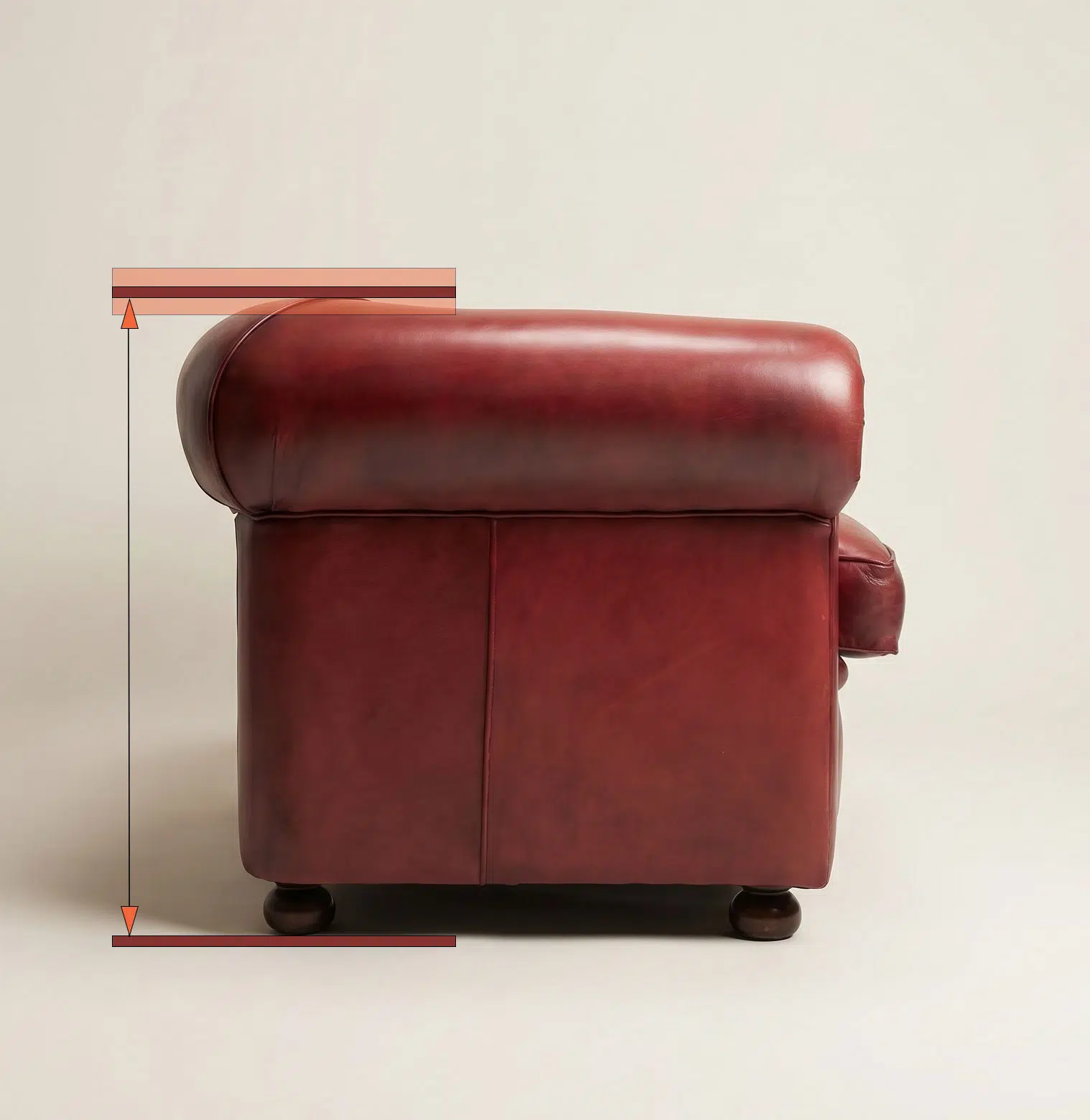
Measure from the floor to the highest point of the furniture. This is usually the top of the back, crest rail or highest upholstered section. Use a flat object such as a large book to balance on the top surface, highest point. Do not measure only to the seat or cushion unless you are checking seat height.
Overall width
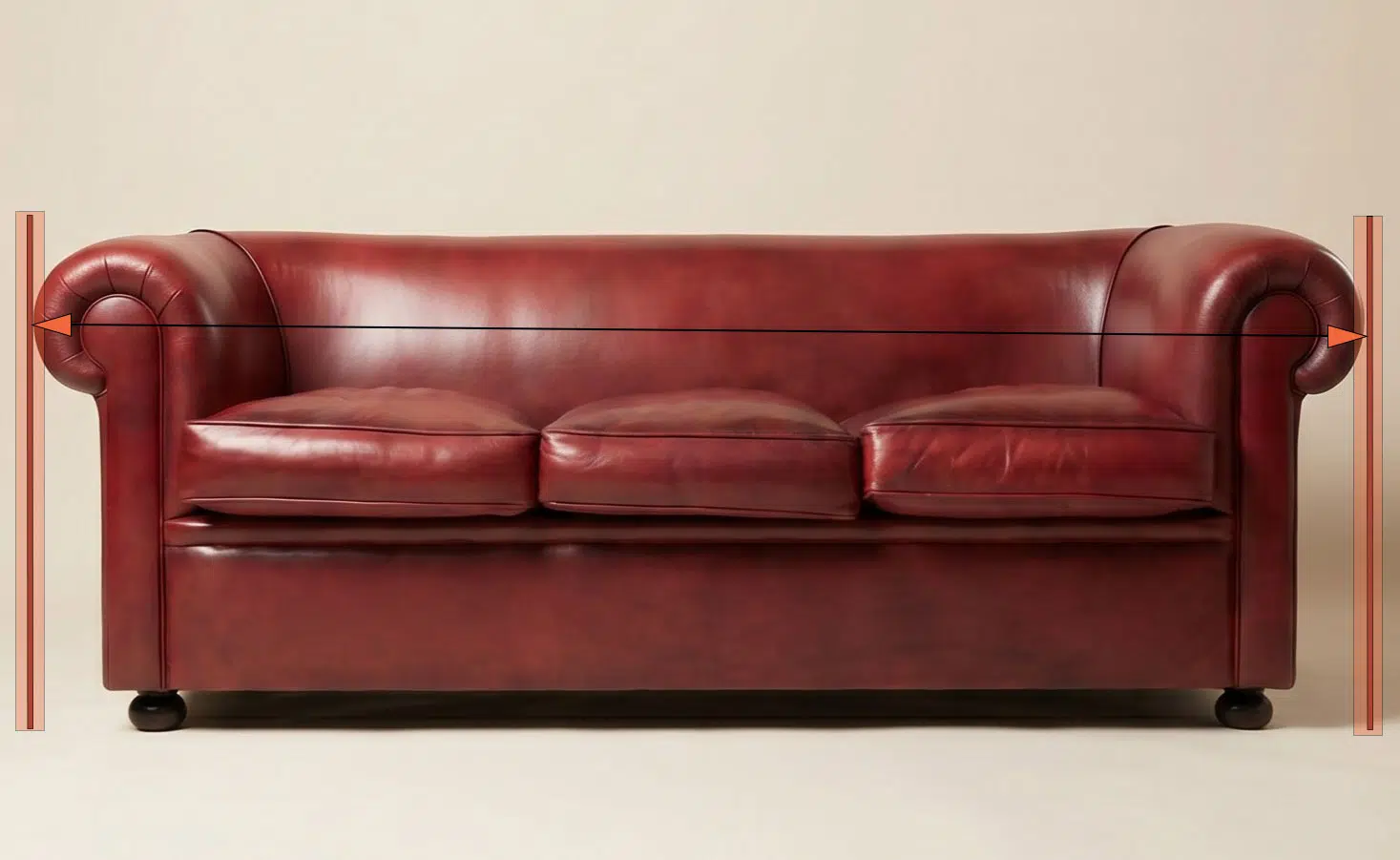
Measure across the widest external point of the furniture. For sofas and chairs, this is normally from the outside edge of one arm to the outside edge of the opposite arm. Include the full upholstered form, not only the internal sitting area.
Overall depth
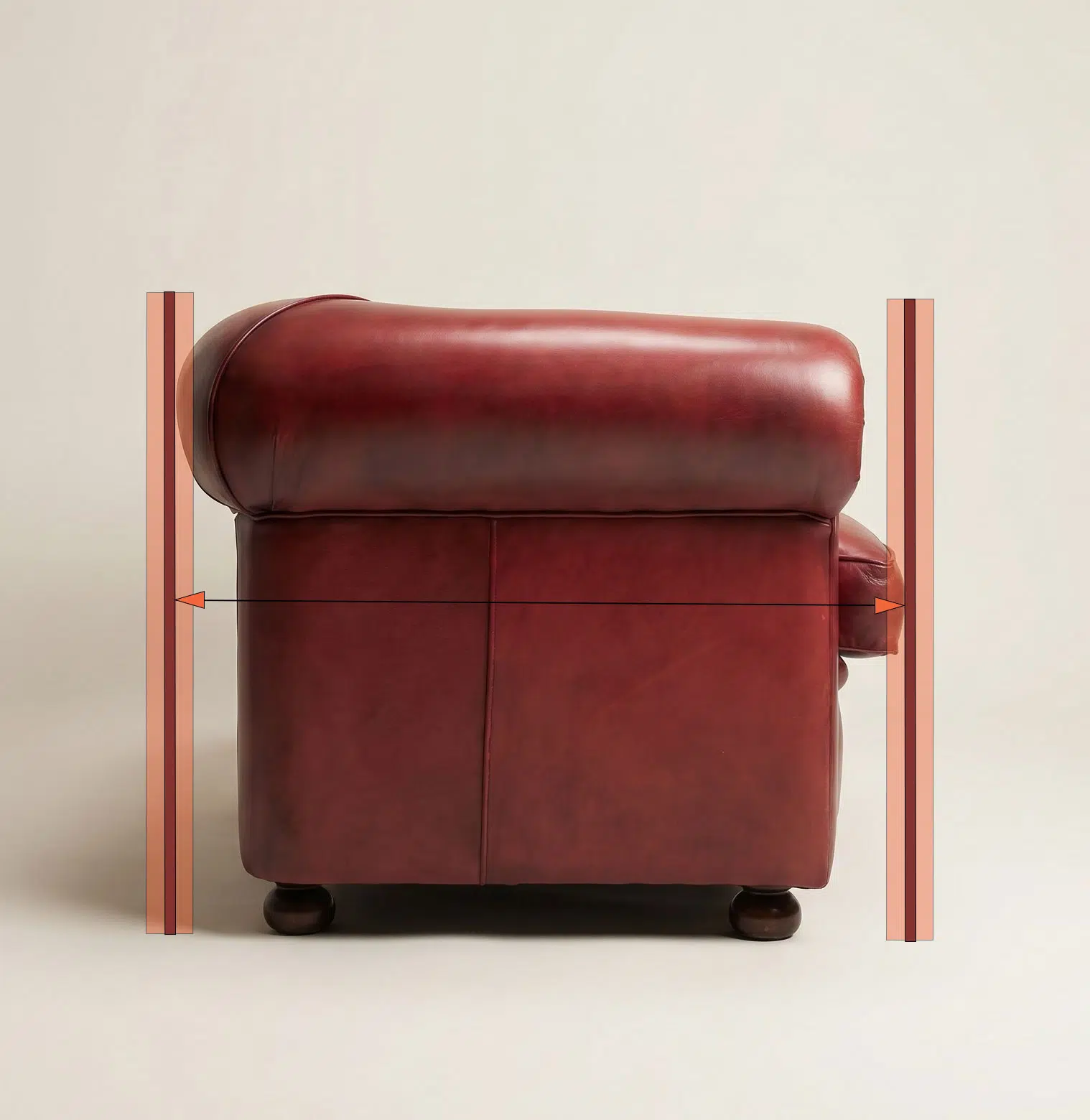
Measure from the most forward point to the furthest rear point. This usually means from the front edge of the frame, arm or cushion to the back of the furniture. Overall depth is not the same as seat depth.
Seat height
Measure from the floor to the top of the seat surface. For loose seat cushions, measure to the natural top surface of the cushion without pressing down. Cushion fill may sit slightly proud when new and settle with use.
Seat width
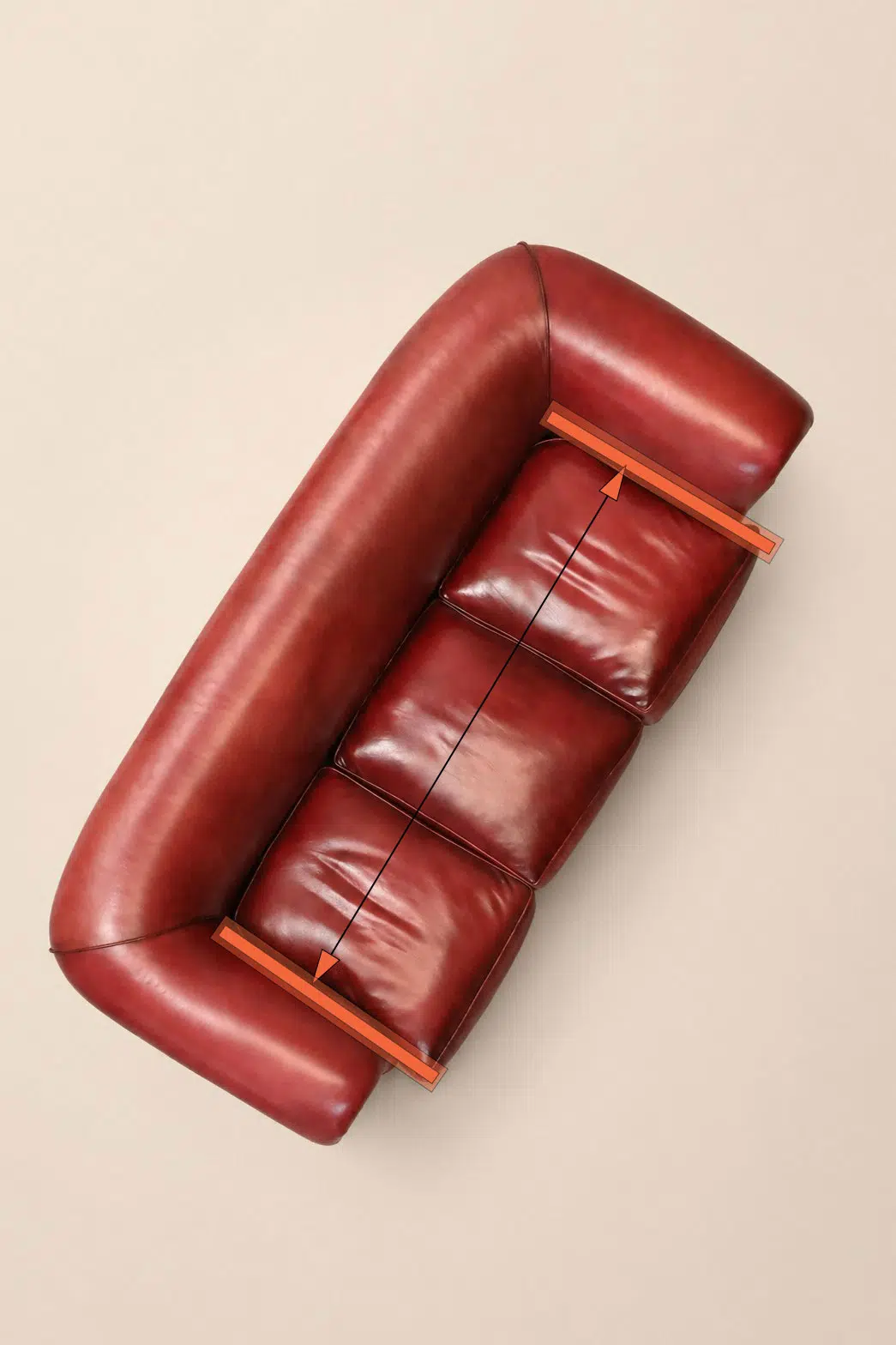
Measure the usable sitting width. For sofas and armchairs, this is normally the internal distance between the arms. Where the piece has no arms, measure the upholstered seat area intended for sitting.
Seat depth
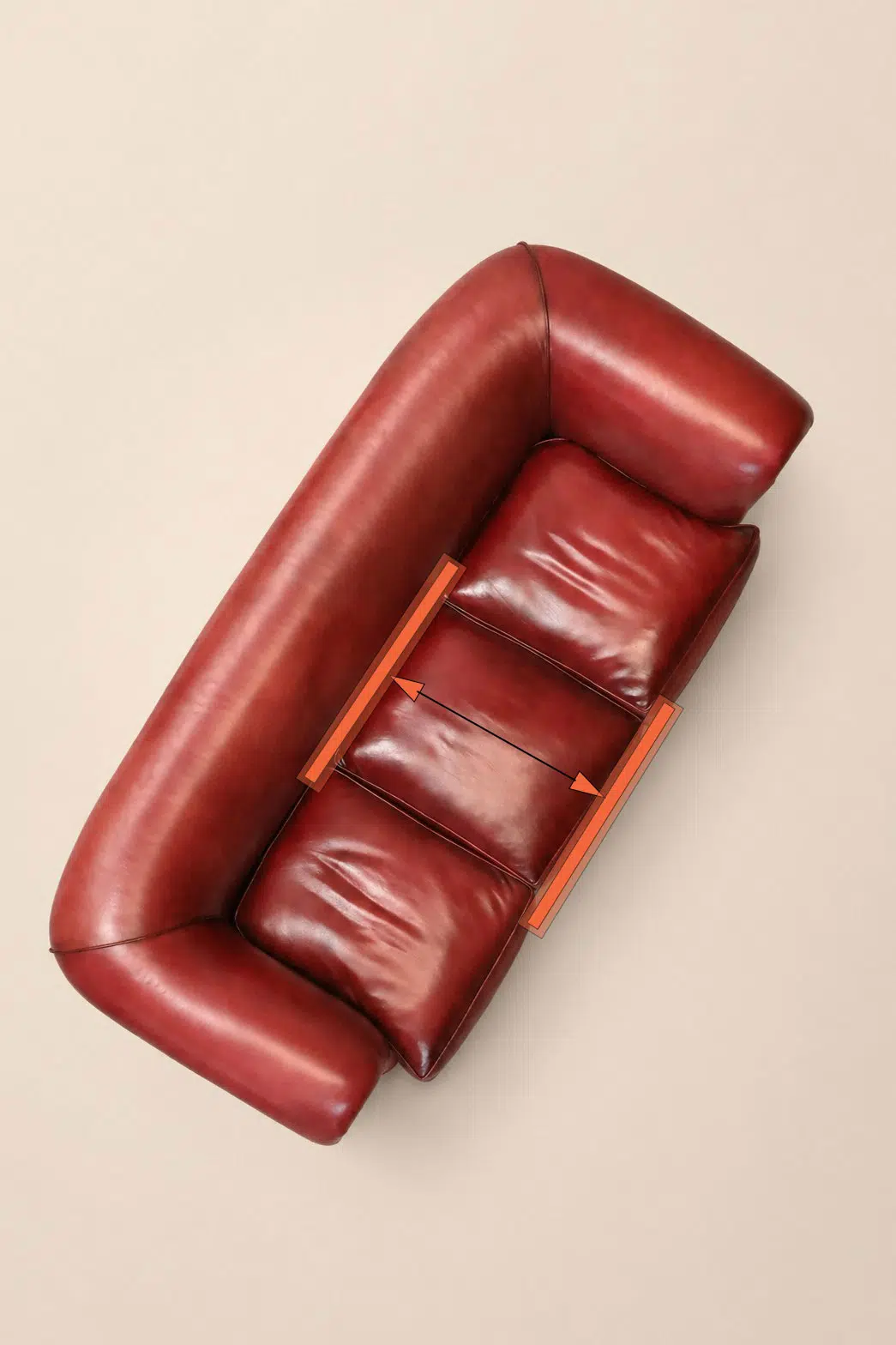
Measure the usable sitting depth. This is taken from the front edge of the seat to the point where the seat meets the back cushion or back upholstery. It should not be taken to the rear outside edge of the furniture.
Access-critical measurements
If a dimension is critical for access, installation or a fixed interior layout, it should be raised before ordering.
This includes doorways, staircases, lifts, corridors, alcoves, built-in joinery and tight room plans. Fleming Howland can review the relevant constraints before production or delivery, but finished handmade dimensions may still remain subject to the stated tolerance unless otherwise confirmed in writing.
Measurement differences after delivery
When checking a finished piece, use the same measurement points shown in the technical drawing above. Differences can occur when measurements are taken from different positions, from softened upholstery edges, or from cushion surfaces that naturally crown, compress or settle.
Where a measurement appears different from the published specification, Fleming Howland will assess the piece against the relevant product dimensions, approved order details and handmade tolerance.