
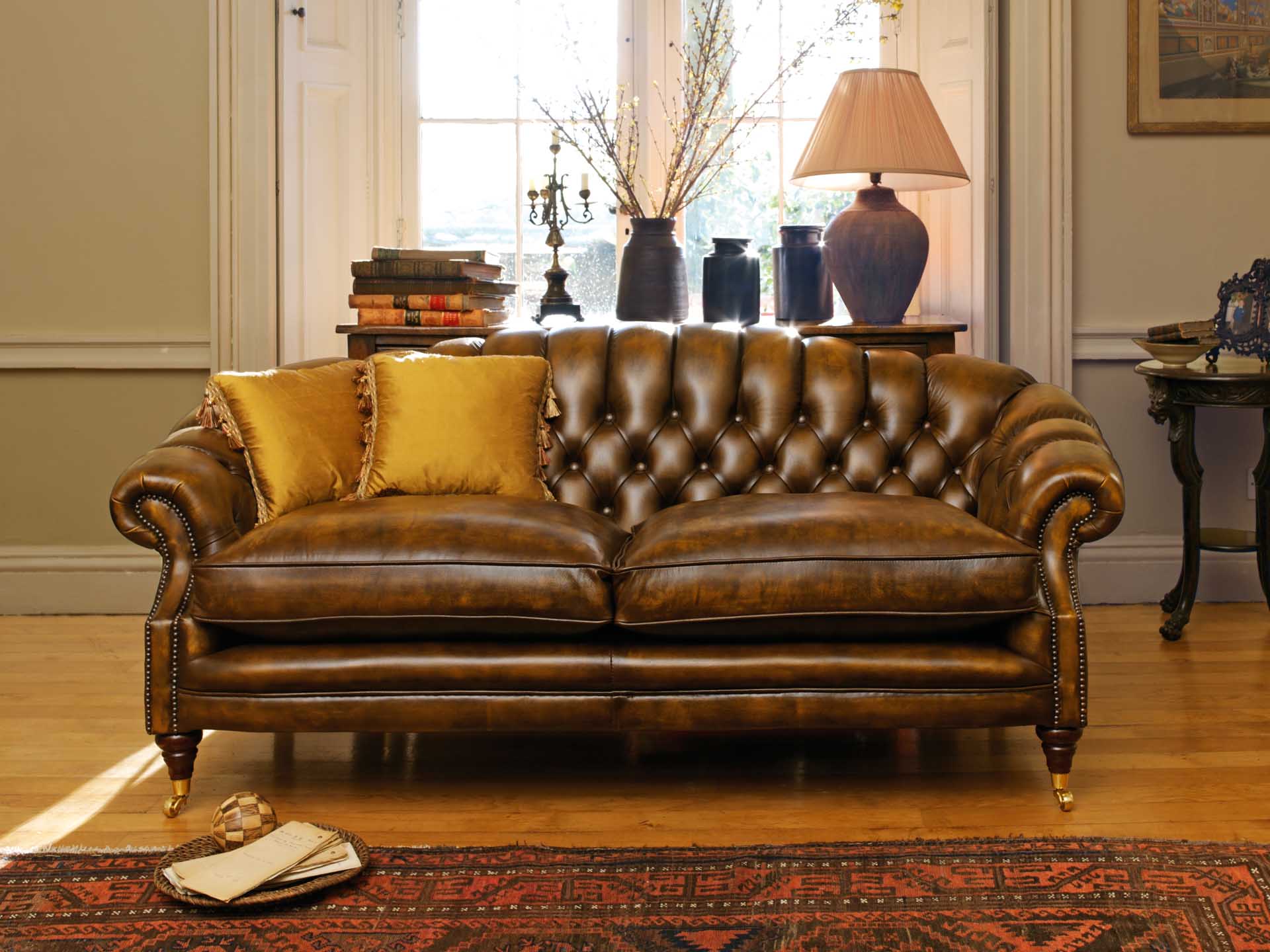
Antiqued leather
Used primarily for our Classic furniture. Fine corrected grain leather with an antique top coat. After the furniture has been upholstered this top coat can be rubbed off in areas to reveal the lighter colour beneath thus giving an aged appearance. Some hallmarks such as scars and insect bites may also show. This leather will age with use revealing more of the base coat. Whilst all natural materials will be subject to pet damage, leathers in general are a lot more resilient compared to fabric. ‘Antiqued’ leather in particular features a protective seal that offers a little more protection than usual which is why it is a popular choice within environments of heavy use (restaurants, bars, hotels, etc). Hide size av. 4.5 sqm. Thickness approx. 1.2mm*
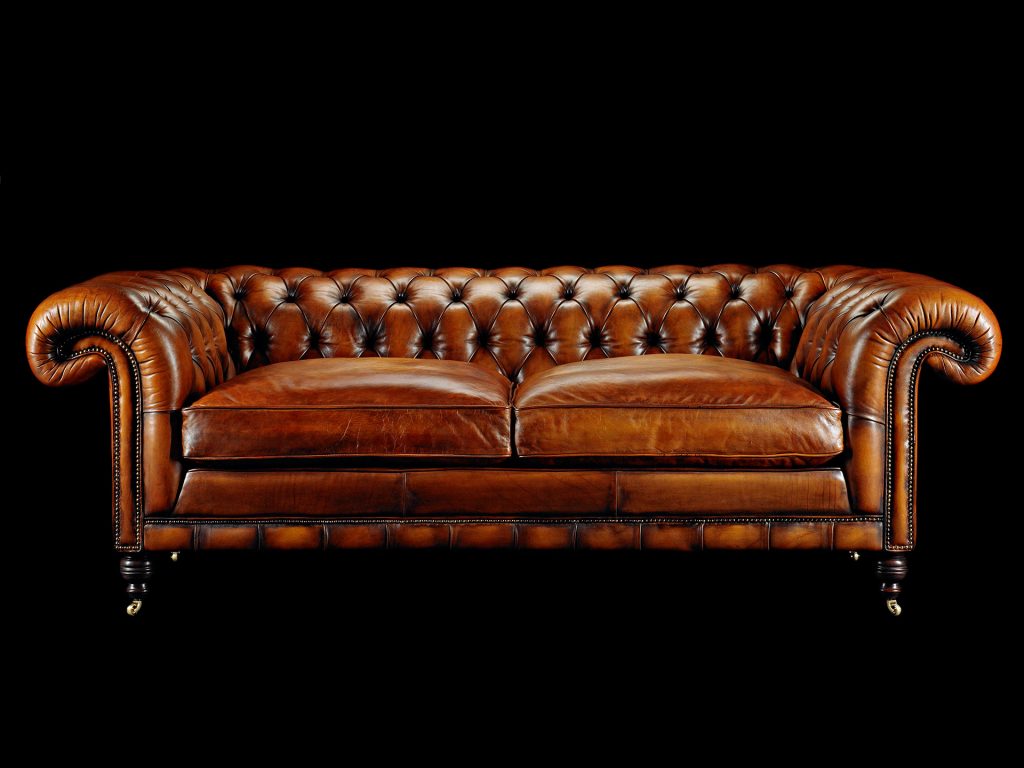
Hand-Coloured leather
Developed by Fleming Howland, this is a soft full grain, full aniline leather that is used specifically for hand dyeing. Colour dyes are mixed and gently massaged into the leather which is then allowed to dry. This process is repeated at least six times to ensure a beautifully-toned patina. As the dyes are absorbed in varying intensities on different areas of the skin, the original hallmarks of the hide ensure that every piece is completely unique and distinctive. full article about this leather can be found here. Full-aniline leather, which is the hide’s most organic state, will always reveal heavy scarring and blemishes. One of the advantages of the hand-coloured finish is its long-term serviceability. The surface can be professionally refreshed, blended and recoloured over time, helping the furniture age as a maintained object rather than a disposable one. Hide size av. 4.5 sqm. Thickness approx. 1.2mm*
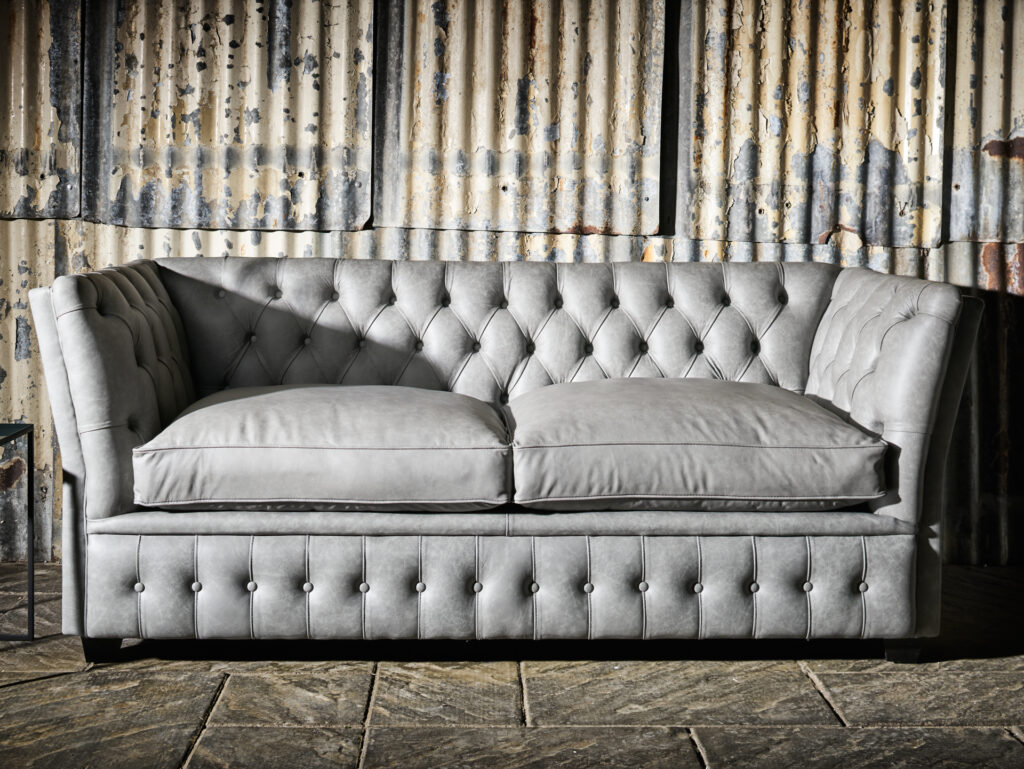
Saddle Leather
Especially developed for an aged yet contemporary finish. This is a full grain, semi-aniline leather full of character with scars, bites and scratches. Very hard-wearing. A natural full-grain leather with a slight pull up characteristic, the leather when stretched lightens to the hide dye colour beneath giving a pleasant contrast of shades. Hide size av. 4.5 sqm. Thickness approx. 1.2mm*
Sensitivity to marks and scratches
Because leather contains natural oils within its surface, it is sensitive to scratches and rub marks through normal use. These marks are superficial only and do not weaken or damage the hide. They should be regarded as part of the natural behaviour of the material rather than as defects. While specialist creams and conditioners are available to reduce the visibility of such marks, Fleming Howland generally recommends allowing the leather to evolve naturally, developing its own patina over time.
Natural hallmarks
Leather will display many inherent hallmarks which are part of its authenticity as a high-grade natural material. These may include indented healed scars, stretch marks, insect bites, variations in grain texture, subtle colour shading, vein lines and growth marks.
Understanding quality
Leather thickness and leather quality are not directly linked. A thicker leather is not necessarily better, nor is a finer leather lower in quality. Quality is determined by factors such as hide selection, grain structure, tannage, finish, and suitability for upholstery use.
As leather is a natural material, slight variations in thickness, handle, and surface character can occur across different parts of the hide. Once upholstered, the leather is also tensioned over the frame and padding, which can make it feel smoother, tighter, or slightly finer to the touch than a loose sample or another style of leather.
To request swatches, please visit the swatches page.